Transforming Navigation Into a Strategic Platform for Digital Experiences
Strategic UX Lead | Director-in-Action | Vision Architect
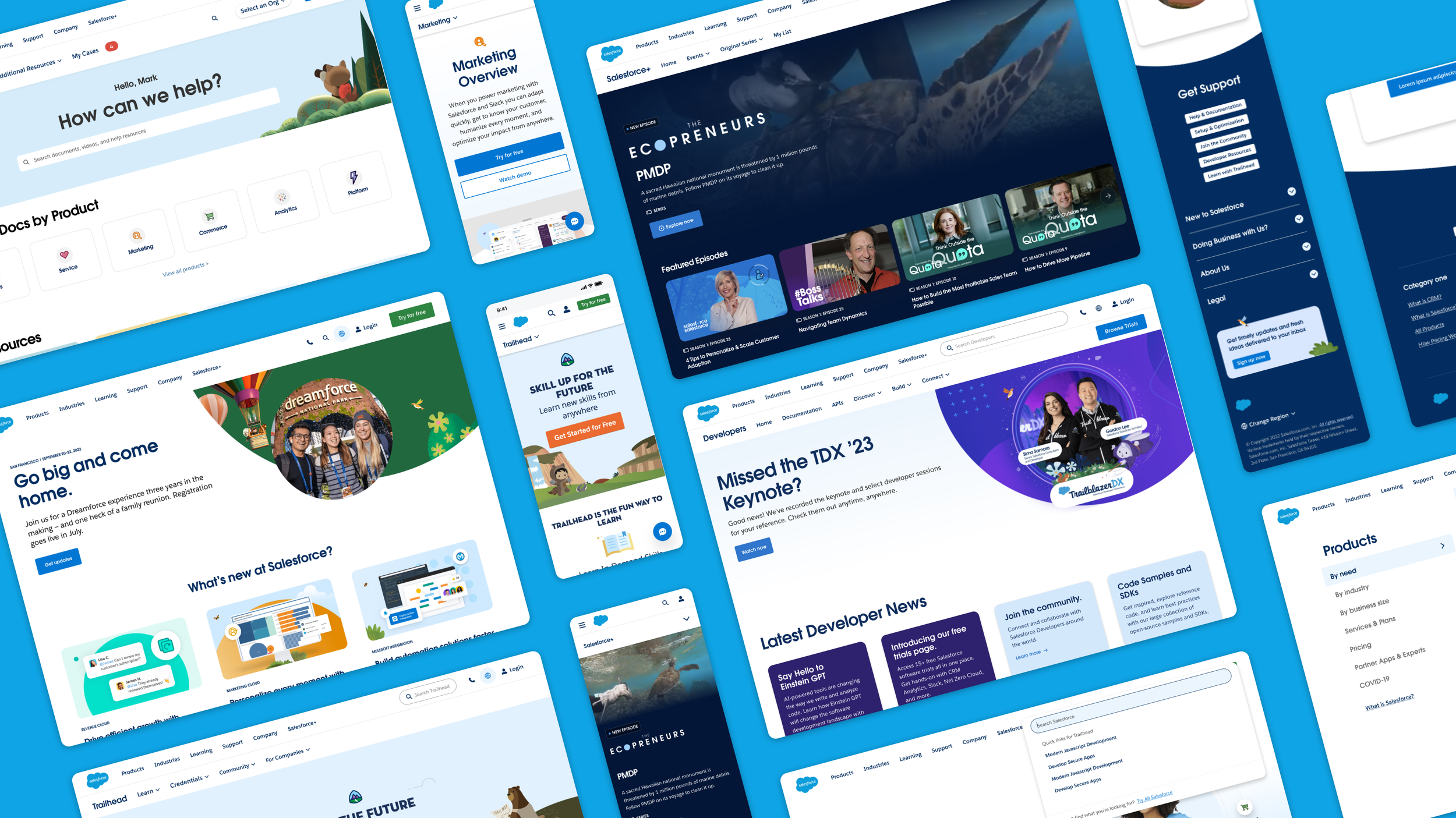
Unifying a fragmented experience
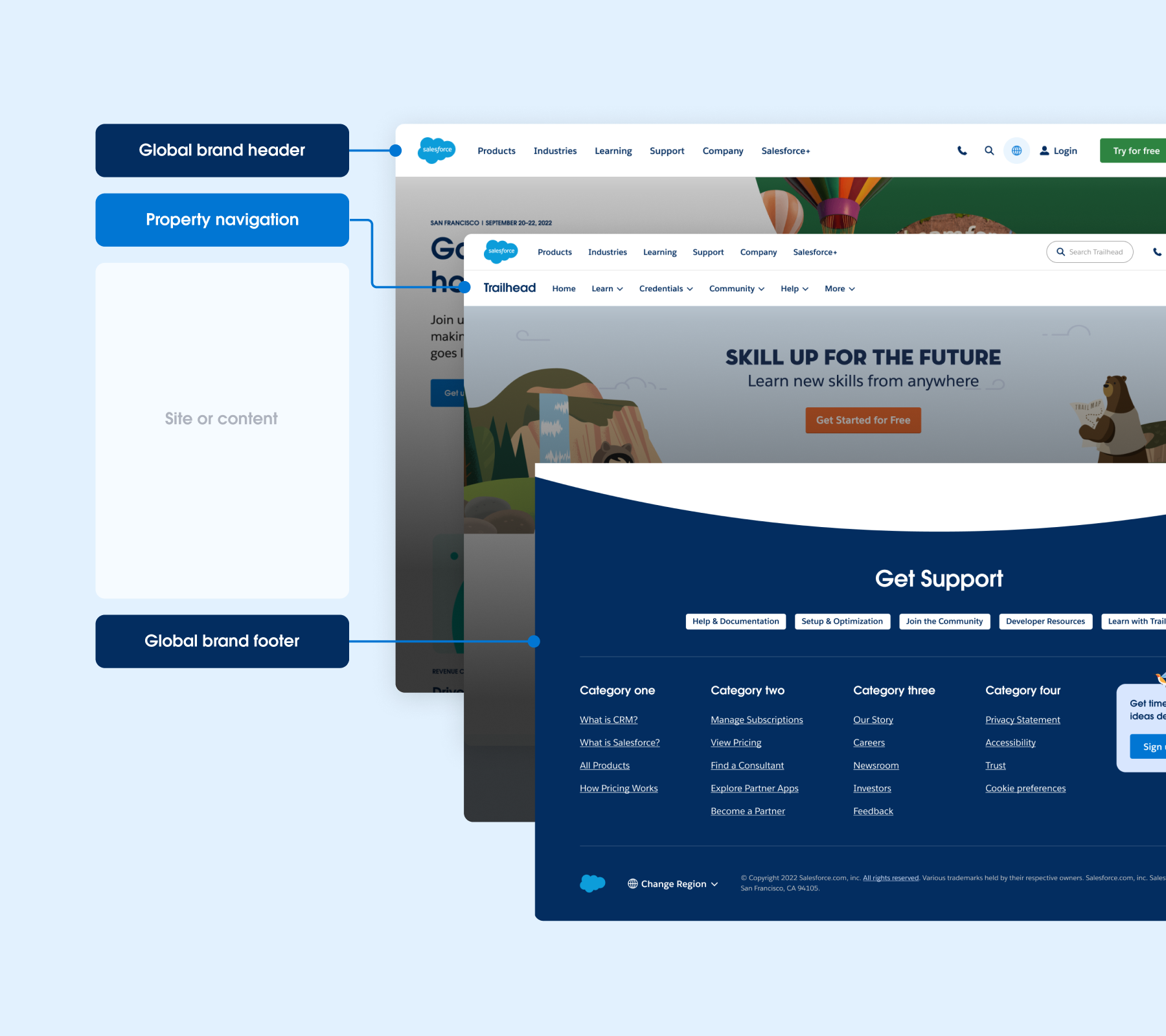
Salesforce’s digital ecosystem spanned 40+ websites and portals—from Marketing Cloud to Trailhead to AppExchange—each with disconnected navigation structures. This fragmented the user journey, created inconsistencies in brand and content discovery, and posed challenges for internal teams to scale updates or adapt quickly.
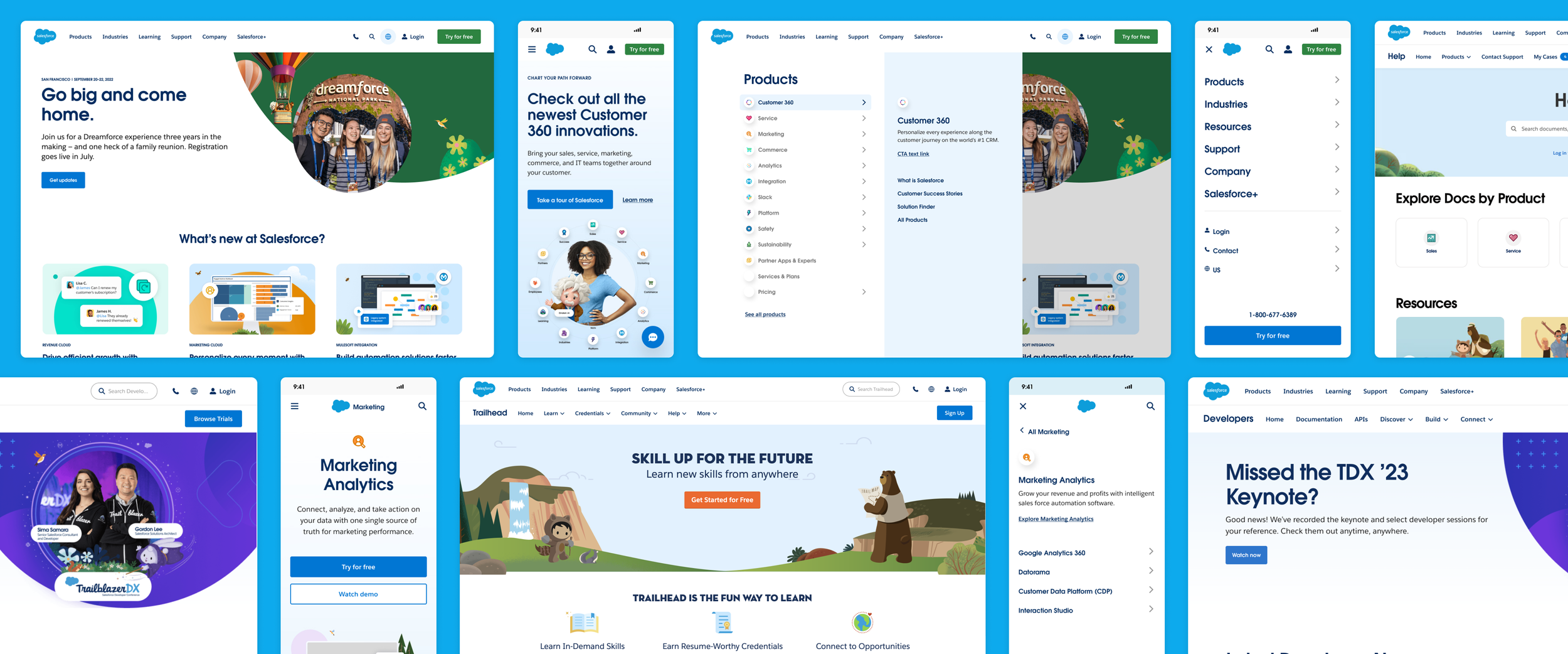
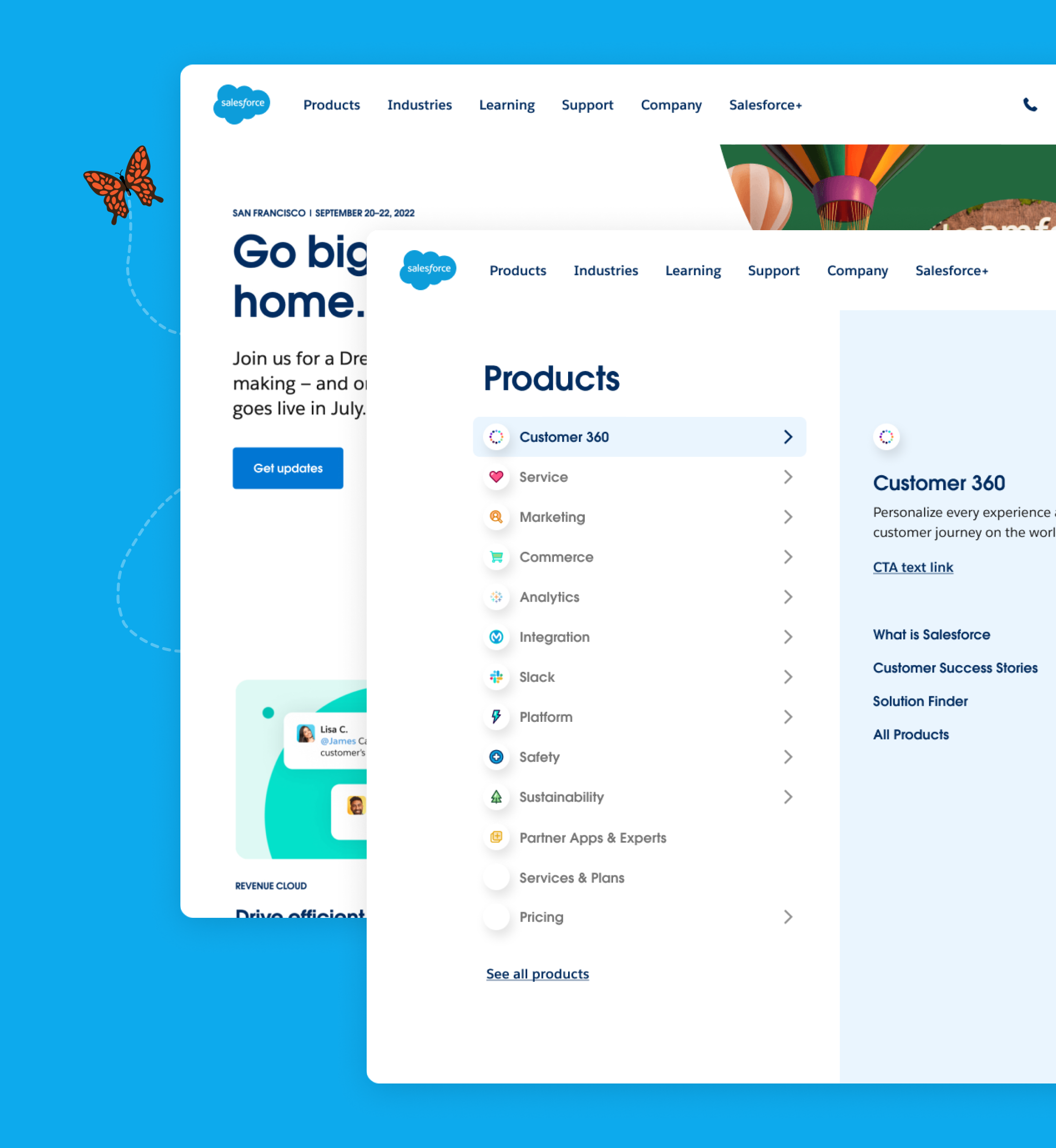
This project was a strategic initiative to unify this digital footprint, developing a unified navigation system that enhances usability, drives cross-site discoverability, and empowers self-service publishing, without needing constant engineering support.
My role
As the UX Lead and Vision Architect, I:
Translated a complex enterprise vision into a clear, strategic framework
Worked hands-on in UX architecture while driving executive alignment across marketing, product, and engineering
Shaped navigation into a productized, scalable experience system—positioning it as a key driver of Salesforce’s digital transformation
Key Responsibilities:
Executive Storytelling & Strategic Visualization
Crafted clear, compelling narratives and visual frameworks to align executives and stakeholders around a unified navigation vision.
UX Strategy & Information Design
Redefined the information architecture to prioritize user intent over org structure, creating scalable, task-based navigation models.
Cross-Functional Leadership
Led collaboration across product, engineering, content, and brand teams to build a flexible, accessible, and system-integrated solution.
Data-Driven Decision Making
Used research and analytics to validate design decisions, optimize performance, and continuously improve user task success and discoverability.
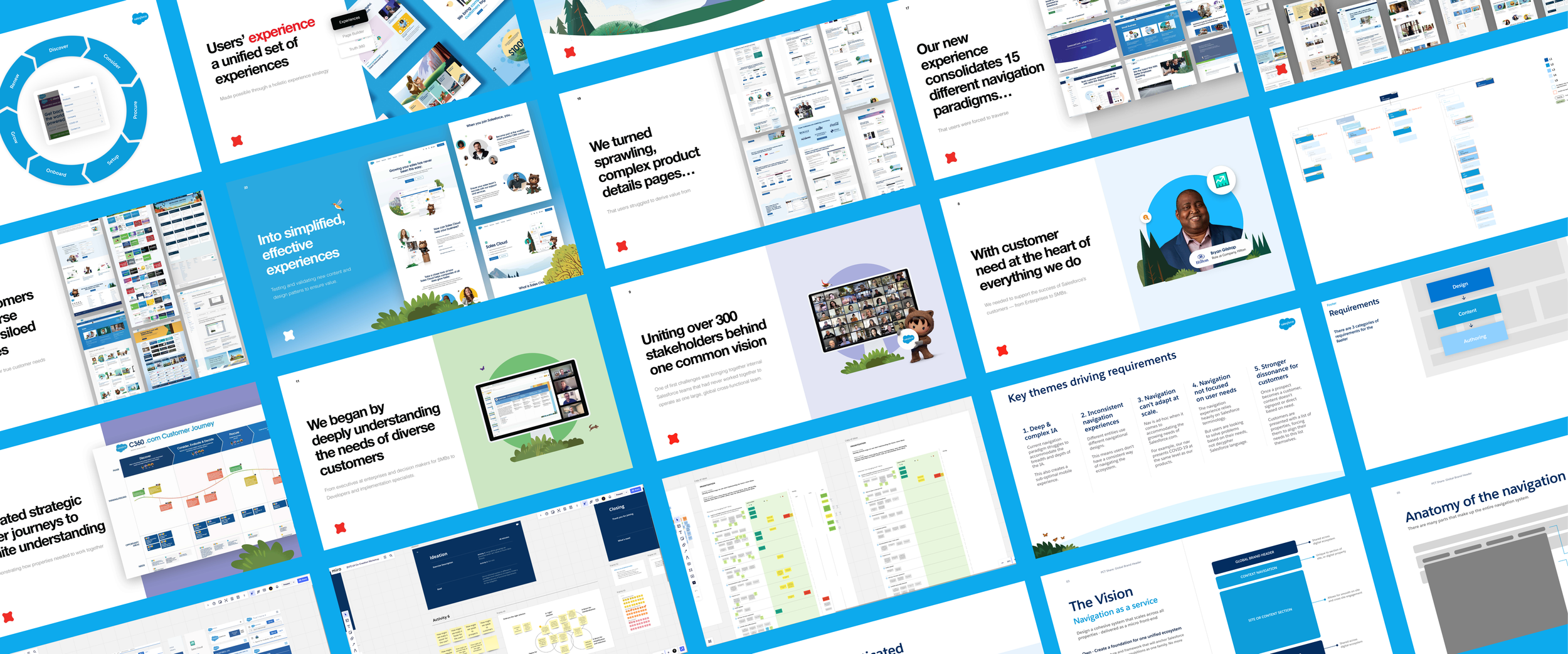
The vision: navigation as a service
Reframing navigation as a product, not just a design element, helped everyone see the need for governance, consistency, and a long-term roadmap.
User-centered strategy
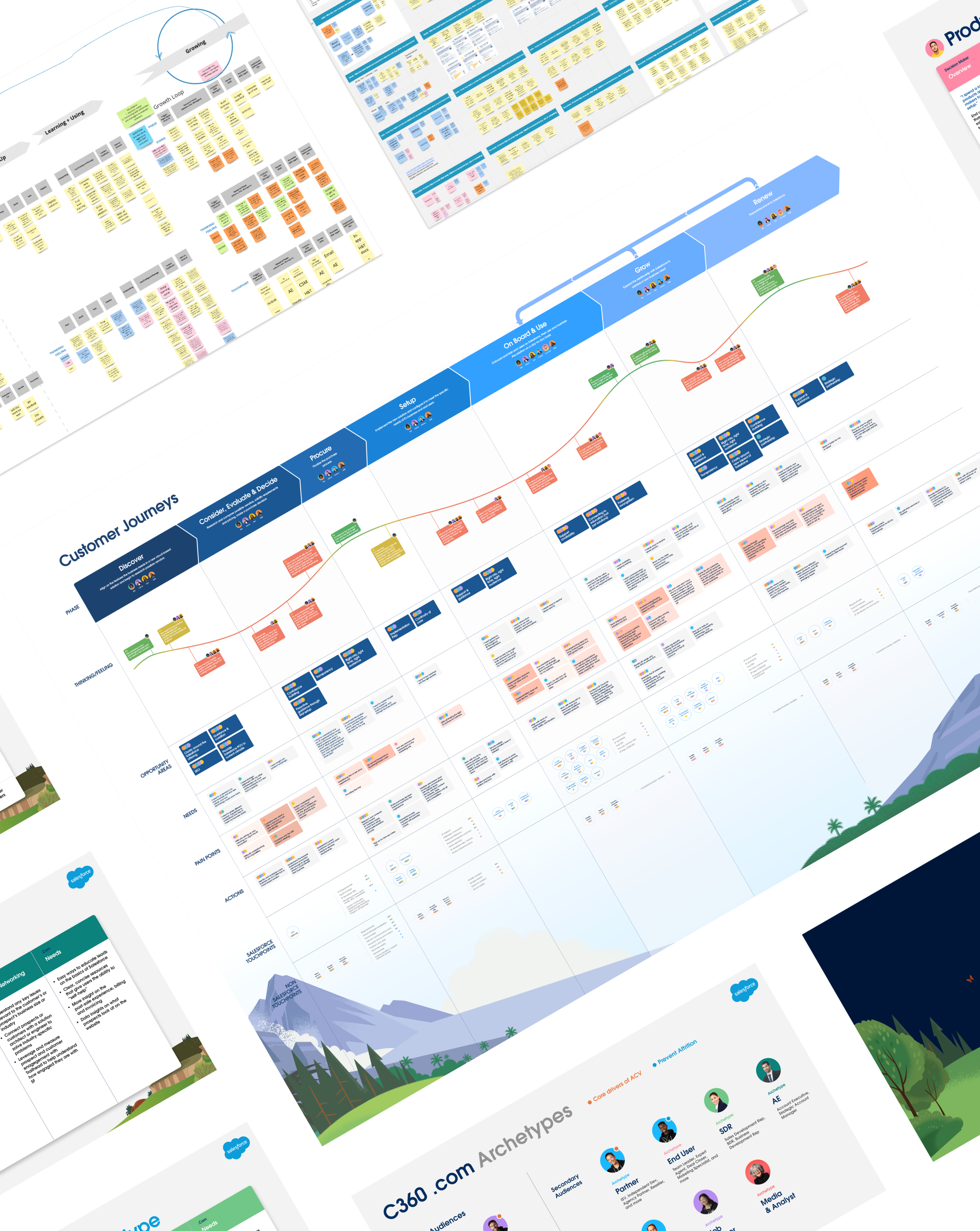
We focused on users first—researching their journeys and how they navigated Salesforce’s sites. Instead of reflecting the company’s org chart, we rebuilt the IA around roles, goals, and tasks.
Testing confirmed the new model made it faster and easier for people to find what they needed with more confidence.
Impact
A single navigation system now unifies Salesforce’s digital properties.
Boosted content discoverability and SEO performance across core marketing and support sites
Reduced bounce rates and increased task success by introducing clearer, role-based pathways
Empowered faster go-to-market by enabling non-technical teams to manage navigation via self-service
Built the foundation for personalization at scale, unlocking smarter, contextual user experiences across Salesforce’s digital footprint