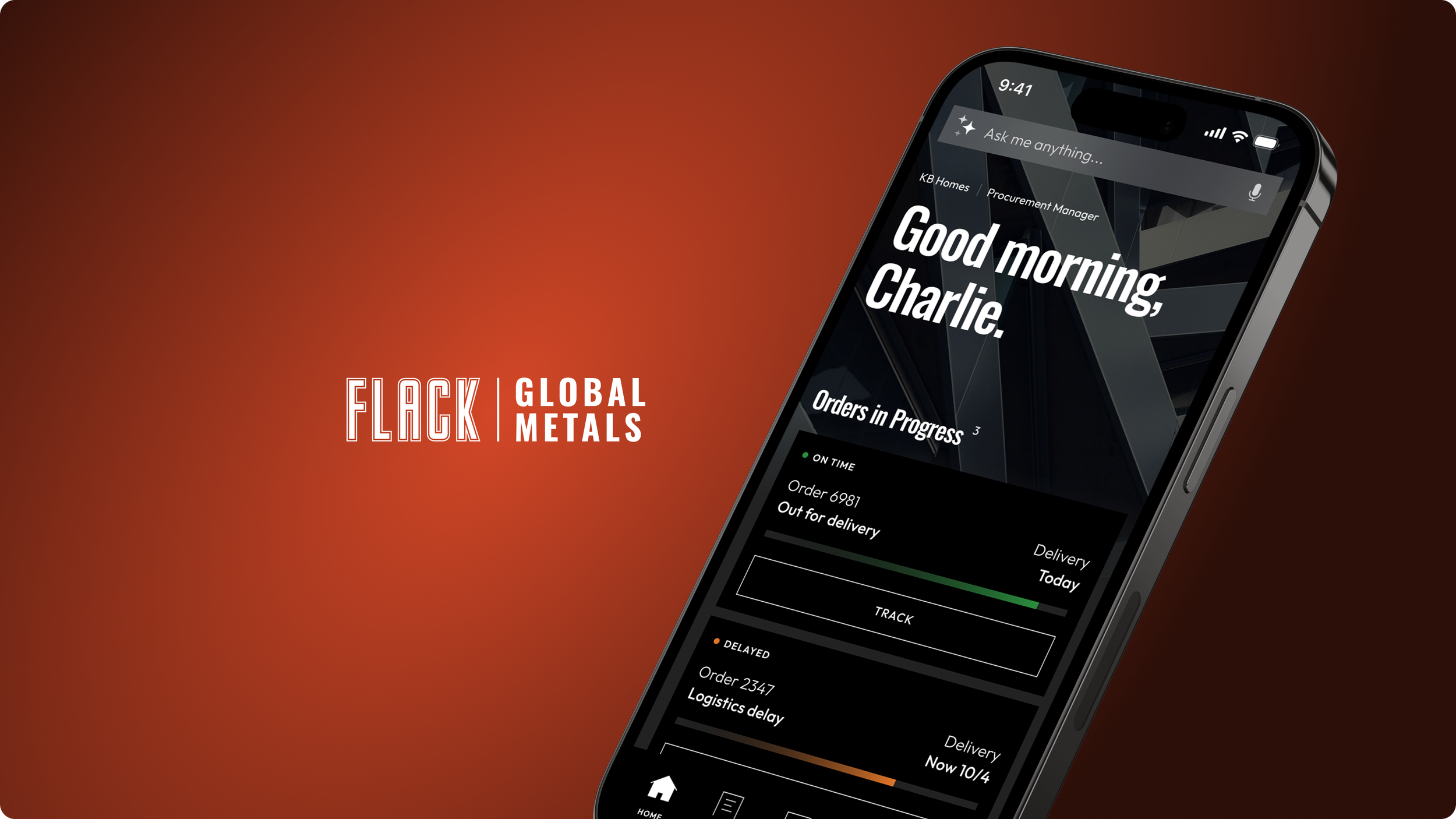
Rebuilding Steel for the Digital Age
Role: UX Director & Strategist
Bringing steel online without losing the human touch
Flack Global Metals operates in a high-touch, traditionally offline industry where most customer interactions still happen via phone, email, and personal relationships. This created friction for both customers and internal teams, slowing down decisions, muddying communications, and limiting scalability.
The opportunity was bold: design a modern customer experience portal that could leapfrog industry expectations, blending intuitive UX with the personal trust and precision Flack is known for. Our challenge was to deliver a platform that felt as seamless and intelligent as leading digital products, while honoring the deeply relational nature of the business.
My role
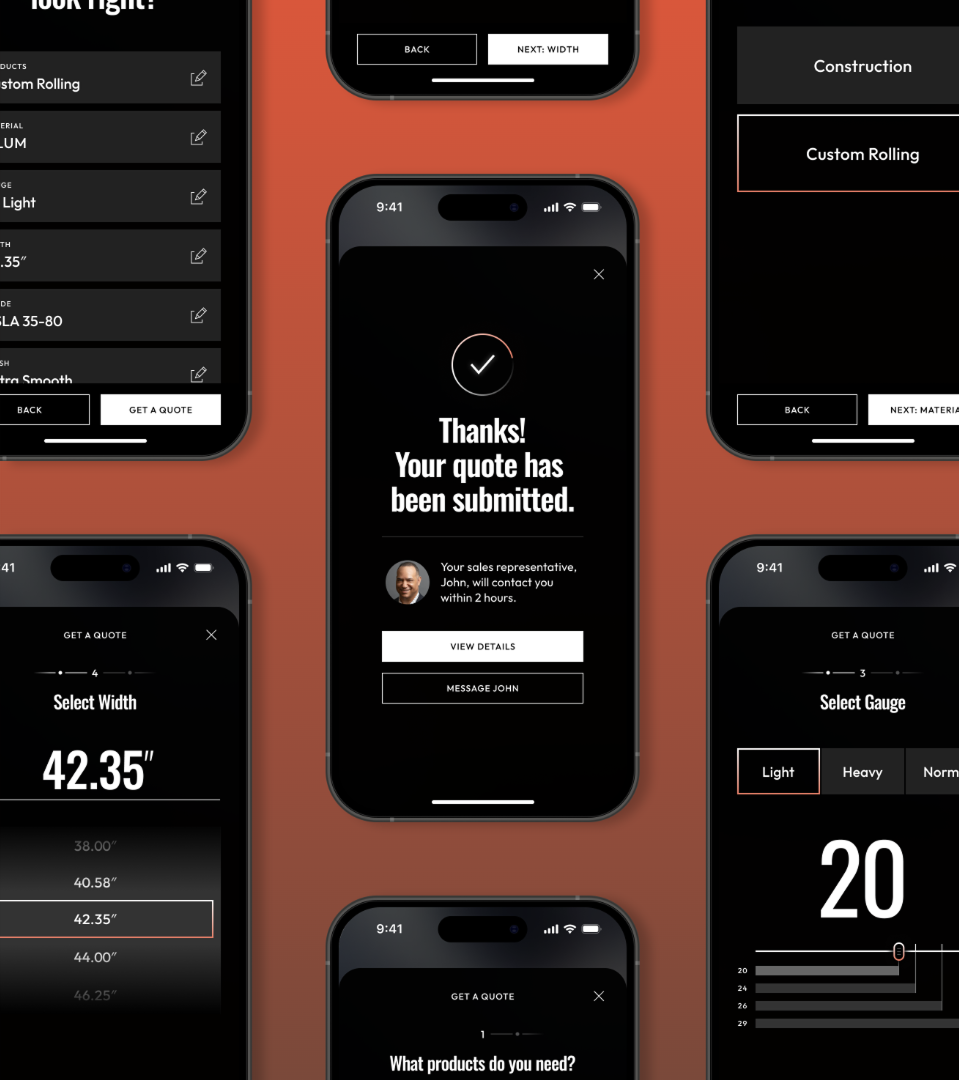
As Experience Director, I owned the strategic foundation and experience design for a digital transformation effort in one of the most complex, analog industries. I led the team through ambiguity, stakeholder complexity, and tight timelines to deliver a high-clarity, human-first platform experience.
Key Responsibilities
Executive Storytelling & Product Narrative
Developed and presented a strategic vision directly with the CEO for Flack’s digital future, reframing the platform as a relationship-enhancing tool rather than just a transactional portal.
UX Strategy & Experience Architecture
Mapped current-state workflows, defined future-state user journeys, and led the creation of scalable IA and UX patterns that simplified complex order, logistics, and inventory data.
Cross-Functional Alignment
Facilitated collaboration across product, sales, engineering, and executive teams to align on goals, constraints, and user needs—turning organizational ambiguity into shared momentum.
Hands-On Design Leadership
Led the creation of wireframes, user flows, and presentation materials while guiding the broader UX approach—from lo-fi exploration to high-fidelity handoff.
Customer-Centered Problem Solving
Translated offline, relationship-based workflows into intuitive digital experiences by identifying key moments of friction and opportunity through direct client feedback and team interviews
Not just a portal, a perspective shift
Customers lacked visibility into orders, inventory, and logistics. Sales Reps and CSRs were bogged down by repeat requests. Leadership knew change was needed but lacked clarity on where to start
The deeper issue: FGM needed more than a product. They needed a mindset shift. I helped them find it — by reframing their internal processes as UX problems and uniting stakeholders around a shared narrative.
Translating complexity into a clear path forward
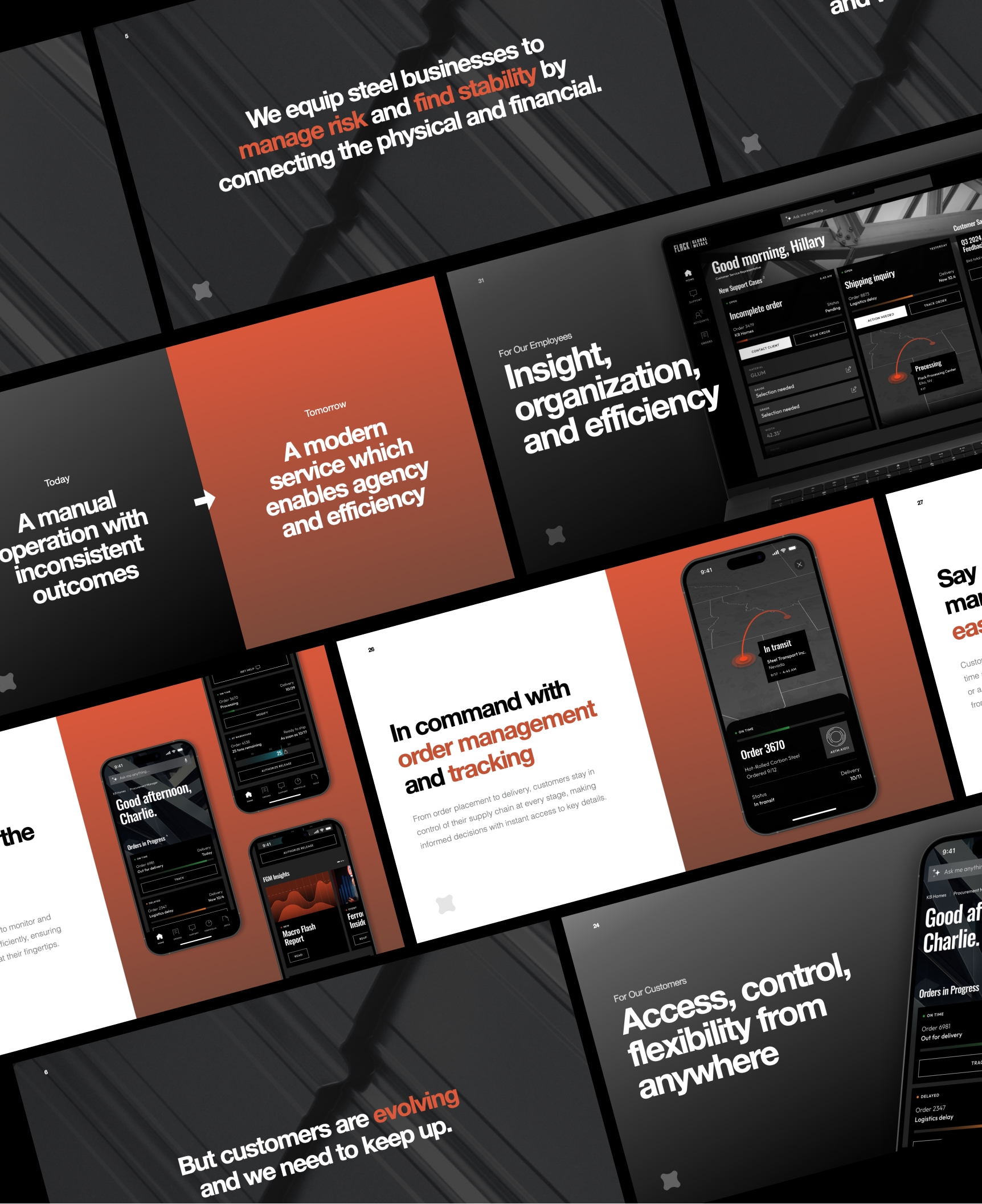
I dove deep into the complex world of steel buying and selling—mapping out the end-to-end journey through stakeholder interviews and workflow analysis. To capture the intricacies of the experience, I created detailed service blueprints that visualized key touch points, handoffs, and pain points across teams—turning operational complexity into clear design opportunities.
The vision: bringing steel into the self-service era
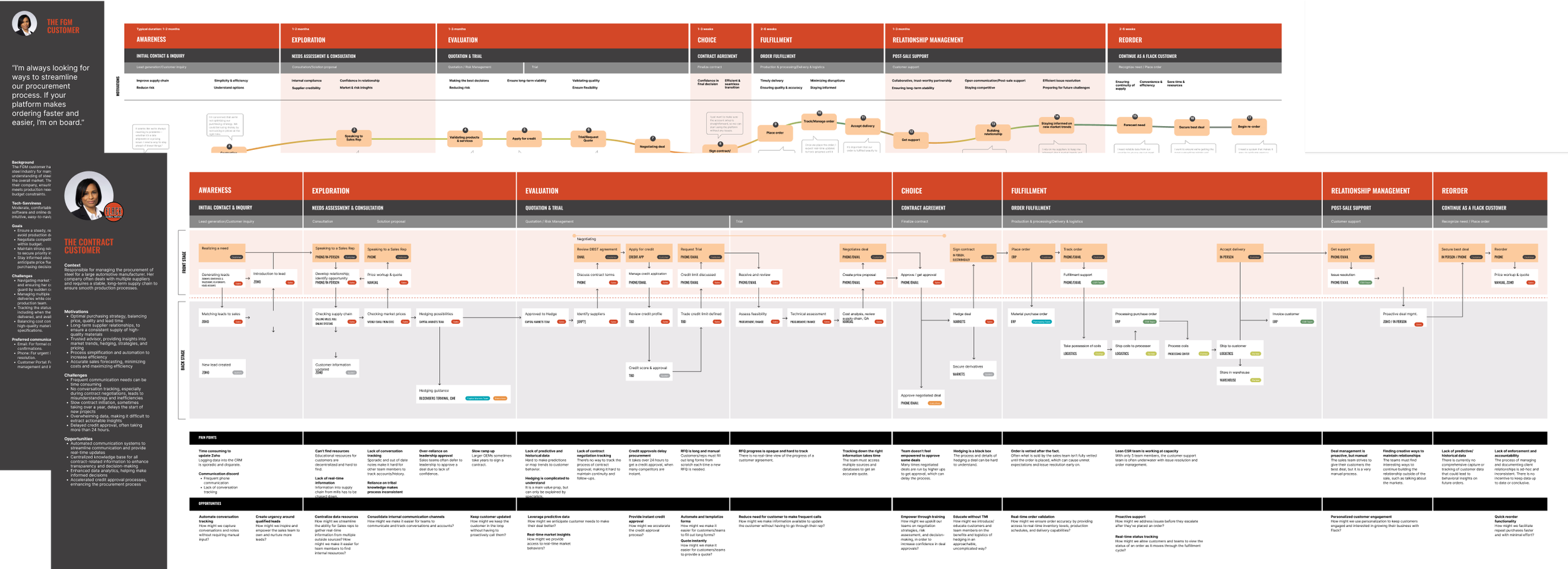
The vision was ambitious: design a customer portal that delivers the clarity and ease of a best-in-class digital product, while preserving the personal relationships that define the steel industry.
The platform would give customers transparency, control, and confidence through role-based dashboards, real-time data, and proactive alerts. For internal teams, it would streamline communication and free up time for higher-value, more strategic conversations.
At its core, the experience aimed to transform operational complexity into a trust-building, brand-aligned digital service—bringing FGM’s customer relationships into the self-service era without losing their human edge.
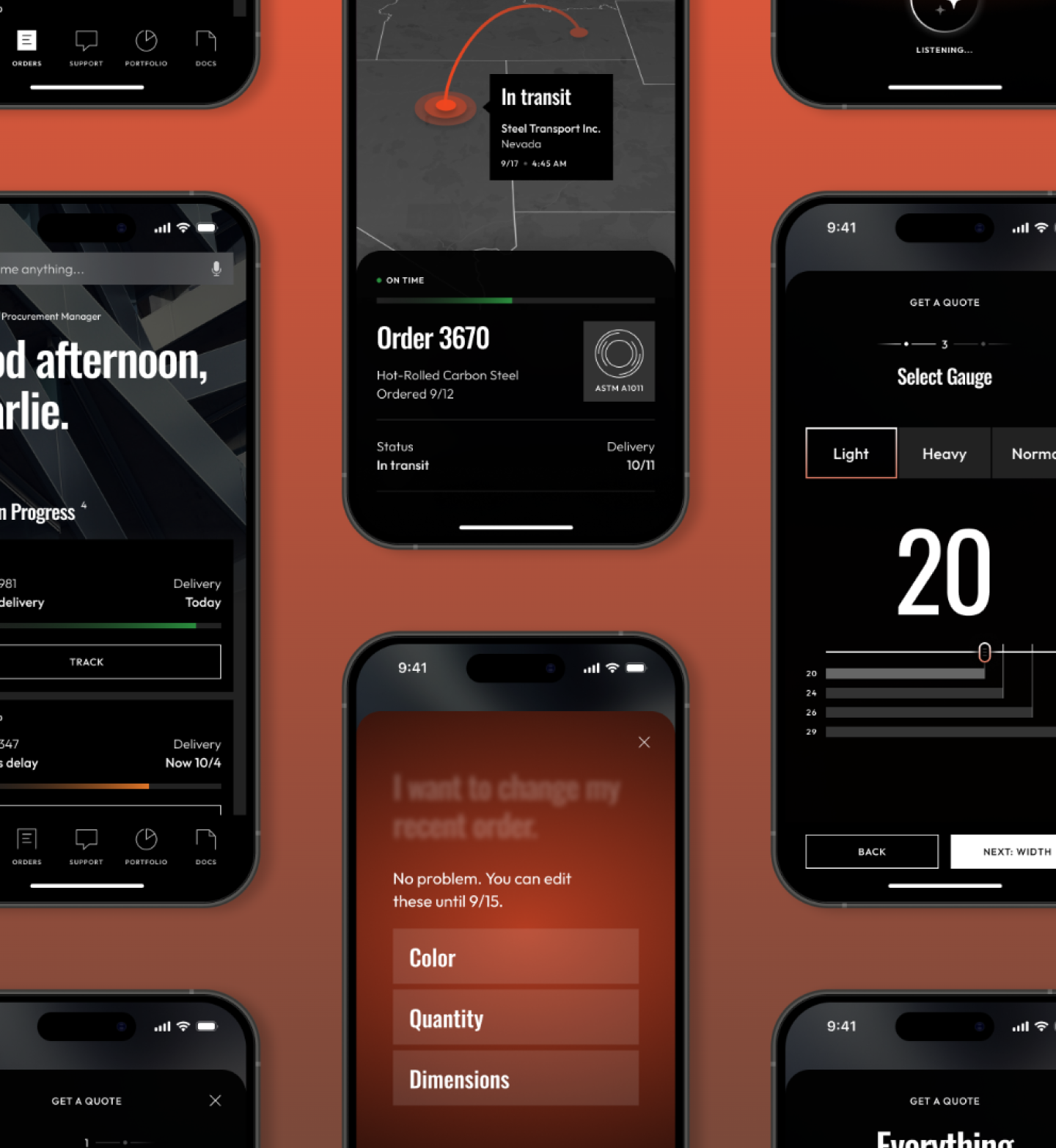
The impact: driving change across teams
The work resulted in a unified product vision and actionable roadmap that shifted FGM’s digital strategy from tool-focused to customer-first.
Sales, product, and executive teams aligned around a shared direction for the first time—supported by a scalable design system that balanced user value with operational efficiency. The vision video became a key alignment artifact, driving executive buy-in, guiding design decisions, and energizing internal teams.
While development is ongoing, the strategy positioned FGM as a design-forward leader in a traditionally slow-to-evolve industry—proving that empathy, clarity, and narrative can drive transformation at scale.