Penny, Reimagined: Designing a Strategic AI Experience for Priceline
Role: Experience Director & Strategist
From chatbot to copilot
Priceline’s AI assistant, Penny, had launched — but with minimal engagement and limited clarity around her role. While competitors embraced emotionally intelligent and visual-first AI tools, Penny lacked cohesion, personality, and purpose.
The opportunity was clear: evolve Penny from a utility chatbot into a strategic, emotionally resonant product surface — one that blends AI intelligence with visual storytelling and becomes central to Priceline’s future ecosystem.
My role
I led the experience strategy, partnering across disciplines to define the emotional arc, system behavior, and product narrative for Penny’s transformation. My focus areas included:
Strategic Storytelling: Framed a compelling product narrative to align internal stakeholders and secure C-suite buy-in
Narrative Design: Defined how Penny should feel—not just what she does—through storyboards, micro-interactions, and content principles
Cross-Functional Facilitation: Bridged gaps between brand, product, and engineering, uniting teams around a shared vision
Prototyping Oversight: Directed core UX flows and motion concepts to show—not just tell—Penny’s potential
Key Responsibilities
Executive Storytelling & Narrative Alignment
Created vision decks and experience diagrams that reframed Penny as a strategic AI platform, driving buy-in from senior leadership and product leads.
UX Strategy & Interaction Design
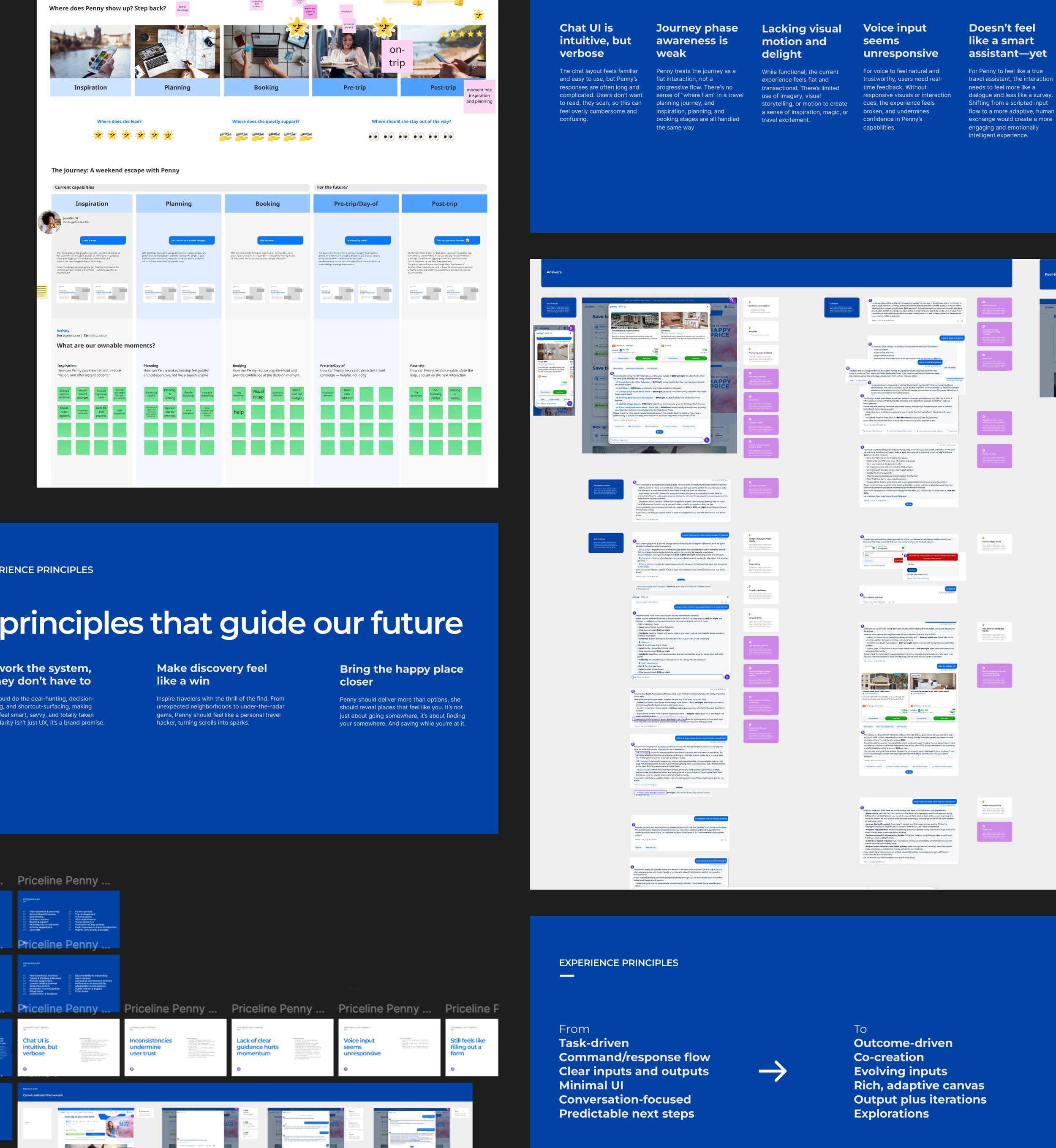
Mapped the user journey across planning, booking, and post-trip reflection, proposing a collaborative canvas UI that integrates conversation, visuals, and structured interaction.
Cross-Functional Leadership
Led stakeholder workshops across AI, design, marketing, and engineering to align KPIs, creative direction, and technical feasibility.
Emotion & Motion Design Direction
Defined signature interaction patterns and emotional "moments of truth" to ensure Penny felt responsive, intuitive, and brand-aligned across modalities.
The challenge: functional but uninspiring
Penny’s experience was functional but uninspired — siloed from the brand, too text-heavy, and unclear in value. Users didn’t know who she was or why she mattered. Internally, teams across product, brand, engineering, and executive leadership had different visions for her potential.
My challenge was to lead the UX strategy that would bring Penny’s vision into focus, unify stakeholders, and reframe her as a multimodal, user-centered travel companion—not just a chatbot.
Elevating Penny from feature to product surface
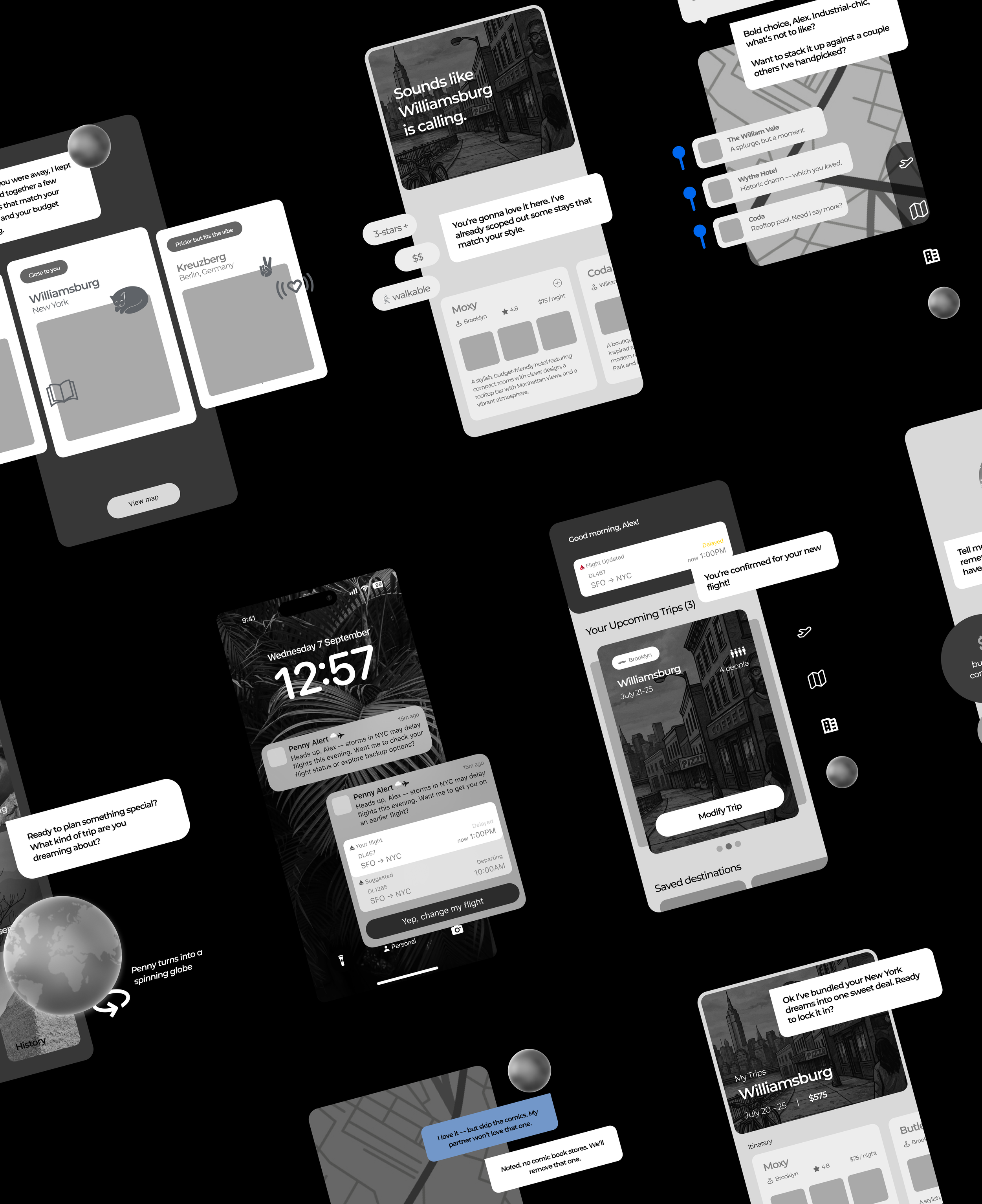
Our strategy began with a core reframing: Penny isn't just a chatbot—she's a branded product surface with the potential to drive engagement, trust, and long-term loyalty.
I grounded this transformation in two critical lenses: user emotion and organizational alignment. On the user side, we focused on high-friction moments in the travel journey—overwhelm, indecision, and planning fatigue—and explored how Penny could shift from reactive answers to proactive support. I led the team in mapping these tension points to emotionally resonant opportunities: when Penny should guide, inspire, or reassure.
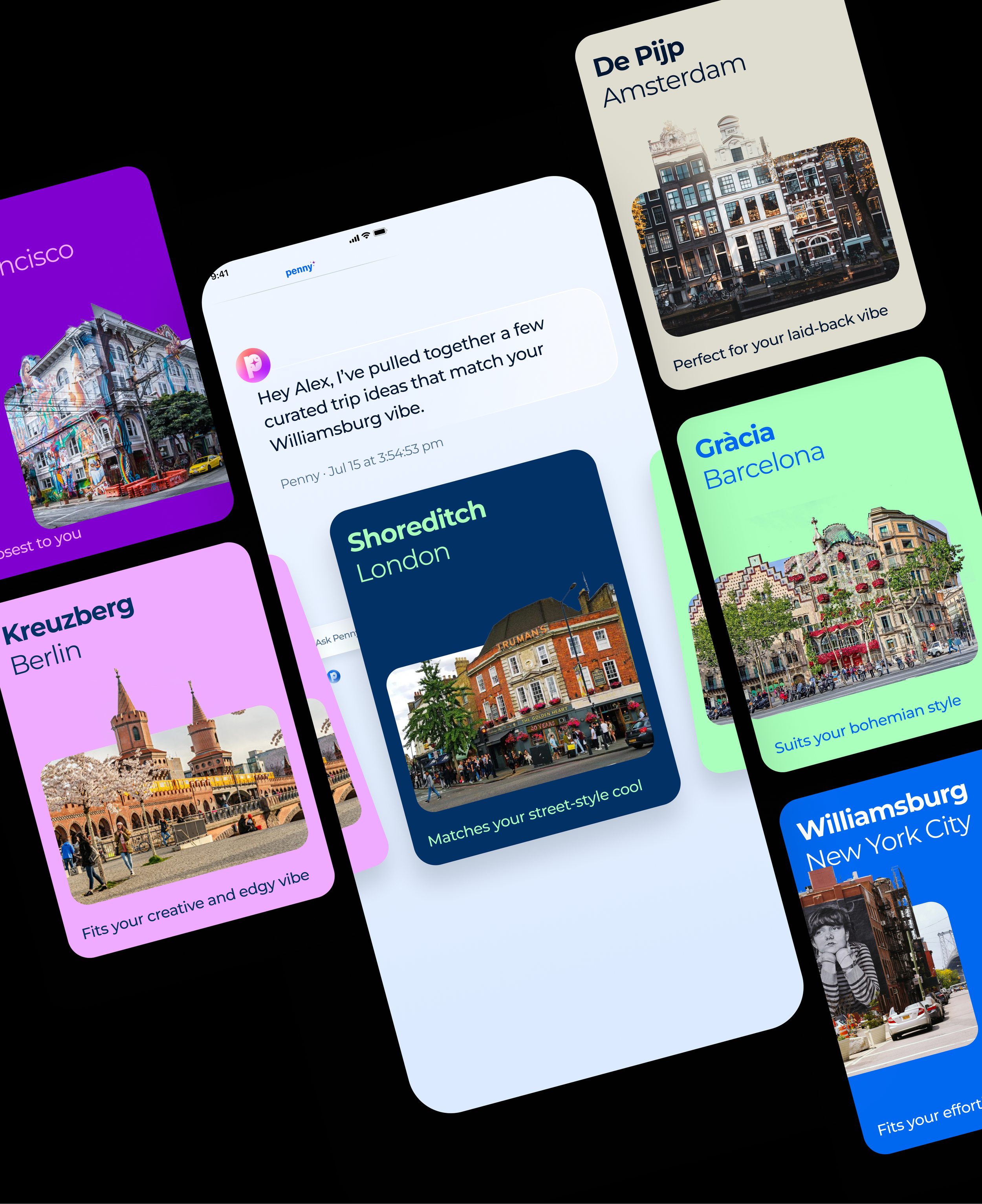
Penny doesn’t just tell you where to go, she shows you where you belong
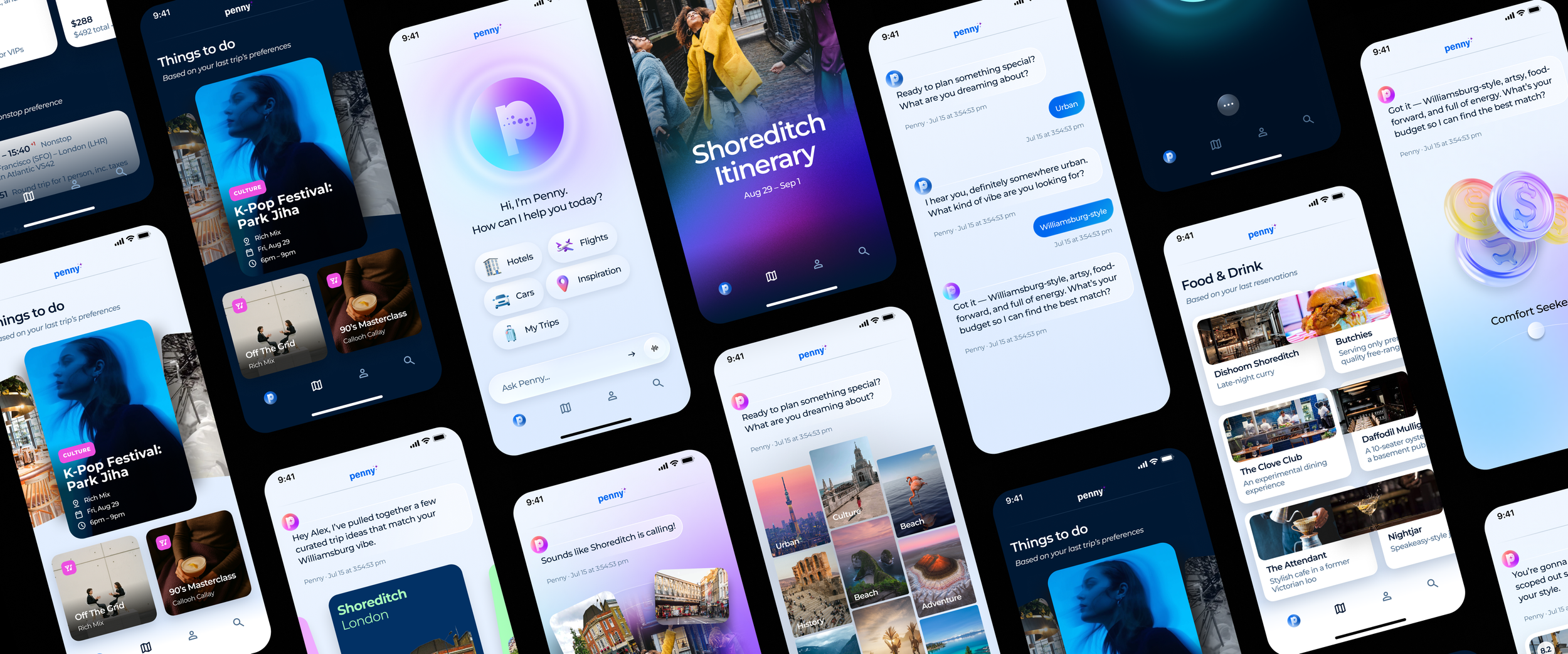
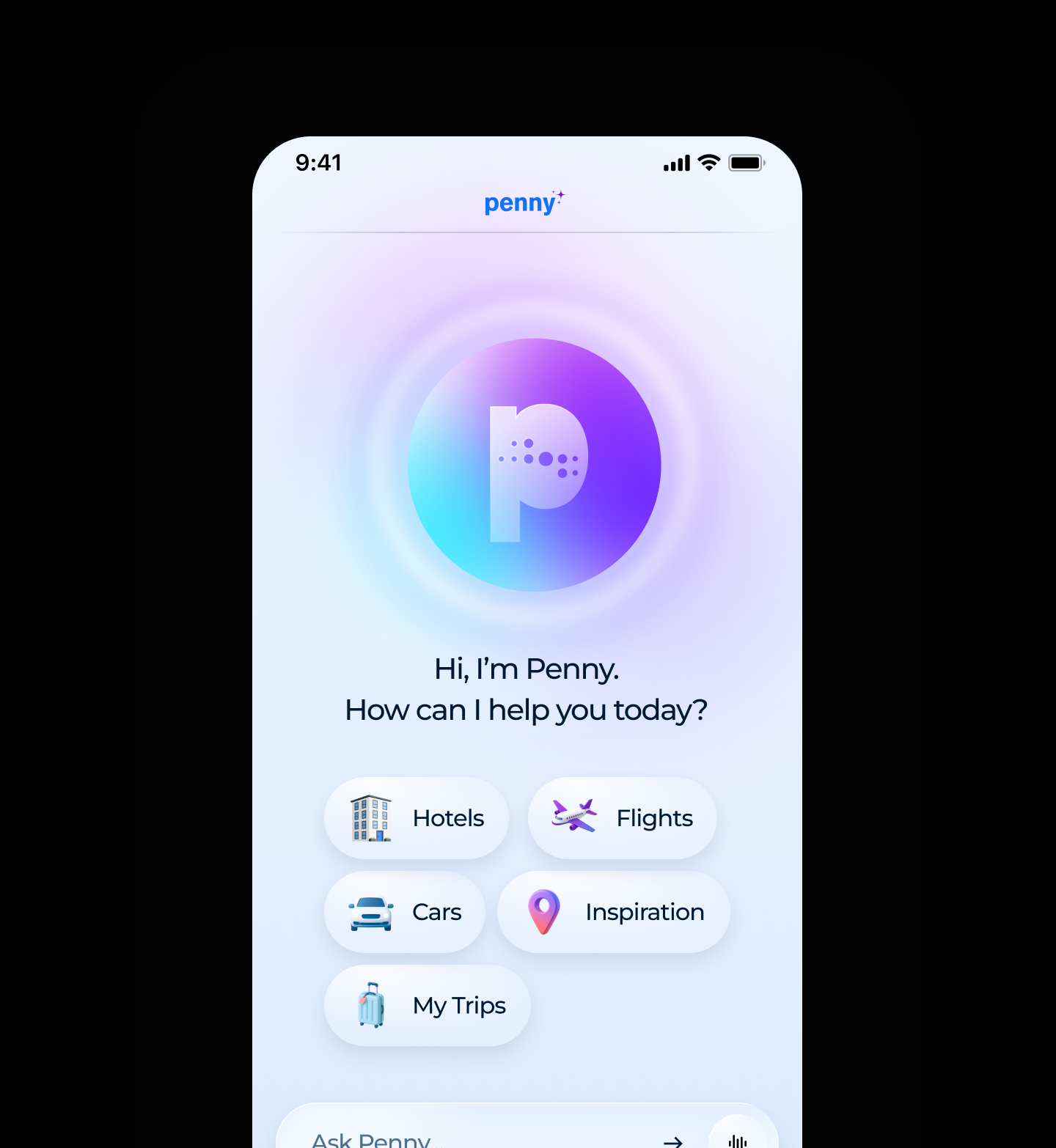
The vision for Penny was to evolve her from a transactional support tool into a front-facing, emotionally intelligent travel companion—one that didn’t just respond to requests, but actively guided, inspired, and delighted users.
Penny became the face of Priceline’s intelligence, surfacing relevant deals, suggesting smart shortcuts, and turning routine interactions into moments of value. She didn’t just recommend destinations—she revealed places that felt personal, blending personalization with Priceline’s savvy, scrappy brand spirit.
In this new role, Penny wasn’t just helping users get somewhere—she was helping them feel like they belonged there.